Our partners from Medjimurje Energy Agency have been working on two insightful projects. Read more below!
The energy transition is not only about producing more renewable energy. It is also about finding smarter ways to heat and cool buildings, manage electricity demand, strengthen energy security and help local communities make informed investment decisions. Two projects funded by the Interreg Danube Region Programme 2021-2027, namely Danube GeoHeCo and ESINERGY have addressed these interconnected challenges through transnational cooperation, innovative solutions and real-life pilot investments.
Both projects brought together partners from across the Danube Region to demonstrate how local action, knowledge exchange and coordinated planning can accelerate the shift towards more sustainable and resilient energy systems.
Danube GeoHeCo: Unlocking the potential of shallow geothermal energy
Heating and cooling account for a significant share of energy consumption, making the transition away from fossil fuels essential for achieving Europe’s climate and energy objectives. The project Fostering the Implementation of Shallow Geothermal Hybrid Heating and Cooling Systems in the Danube Region (Danube GeoHeCo) focused on expanding the use of shallow geothermal energy by integrating geothermal heat pumps into existing heating and cooling systems.
Led by the Međimurje Energy Agency (MENEA) in Croatia, the project brought together 13 partners from eight countries: Austria, Bosnia and Herzegovina, Croatia, Hungary, Romania, Serbia, Slovakia and Slovenia.
The project combined technological development, stakeholder engagement, digital innovation and pilot investments to address barriers to wider geothermal energy deployment. Its results include a web-based IT Decision Support Tool that helps project designers and technical engineers assess the technical and economic feasibility of shallow geothermal hybrid systems, estimate investment costs and levelised costs of energy, and evaluate potential greenhouse gas emission reductions.
A digital platform with a built-in virtual marketplace was also developed to improve access to relevant information, connect stakeholders and facilitate the development of future geothermal projects. In parallel, a community-based transnational planning model and a Transnational Action Plan were prepared to support local and regional authorities and other stakeholders in identifying opportunities for geothermal heating and cooling.
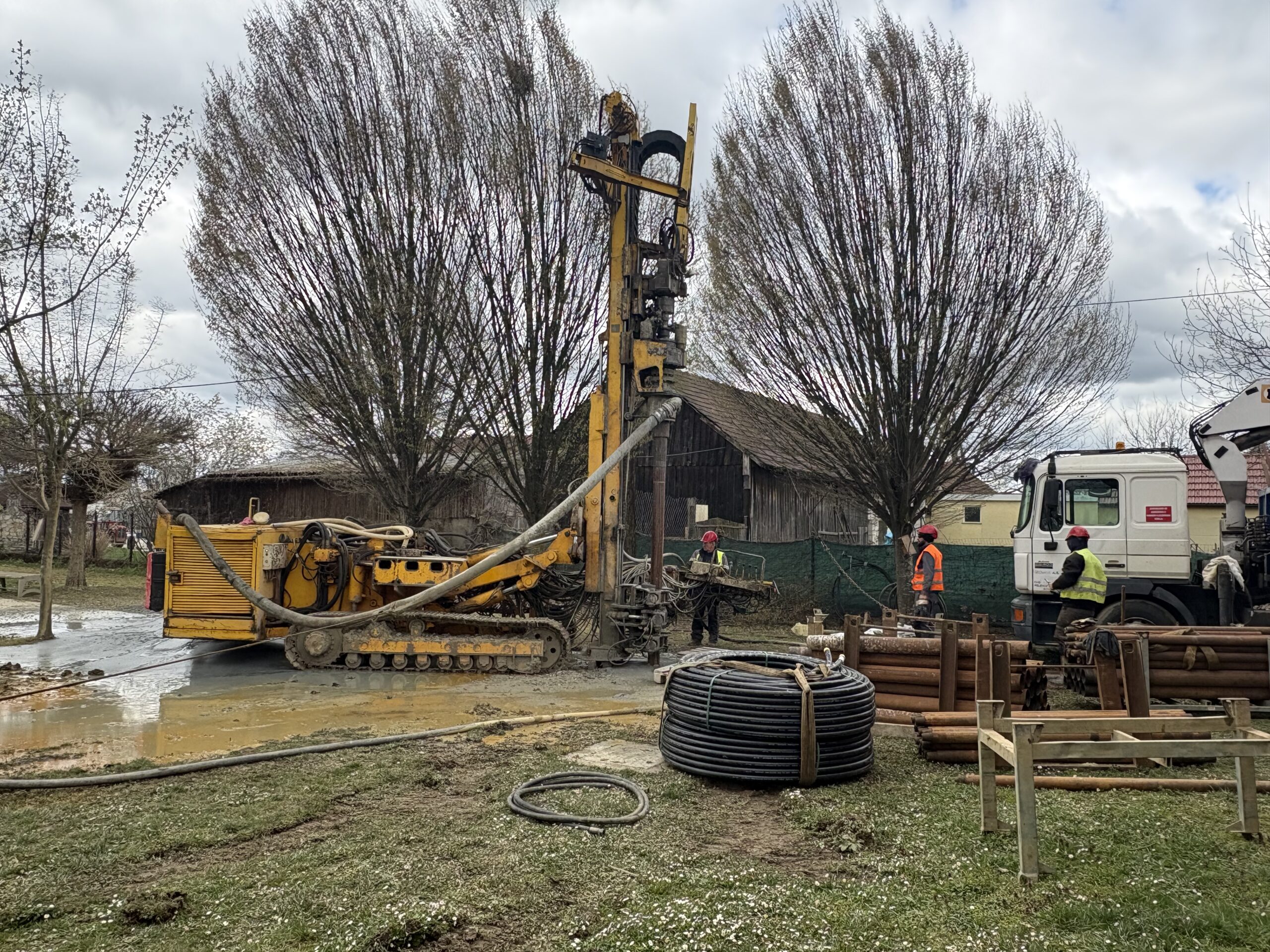
A particularly tangible result was achieved in Croatia at the Pušćine Branch School, where the existing heating system was modernised through the installation of a geothermal heat pump and two geothermal boreholes. The pilot demonstrates how shallow geothermal energy can be integrated into a public building to reduce natural gas consumption, lower CO₂ emissions and improve energy security.
ESINERGY: Making renewable electricity work smarter
While Danube GeoHeCo addresses the decarbonisation of heating and cooling, the project Empowerment of Stakeholders in the Implementation of the Renewable Energy Directive in Terms of Energy Storage and Electricity Network Stability (ESINERGY) focuses on another increasingly urgent challenge: managing the growing imbalance between renewable electricity generation and the capacity of local electricity grids.
As photovoltaic installations become more widespread, electricity networks face increasing pressure from fluctuating production and peak demand. Energy storage, smart monitoring and improved energy management can help address these challenges, enabling communities to make better use of locally generated renewable electricity.
Led by the Local Energy Agency Pomurje (LEA Pomurje) in Slovenia, ESINERGY brought together 16 partner organisations from 12 countries, including MENEA, which participated as a project partner. The project work combined transnational knowledge exchange with eight pilot actions demonstrating different approaches to peak-load reduction and improved energy independence.
The implemented pilots covered a range of practical applications, including battery storage in a public administrative building in Čakovec, Croatia; smart management of solar electricity and electric vehicle charging in Slovenia; energy monitoring in Austria; smart battery management in Bulgaria; and a photovoltaic installation combined with battery storage in Bosnia and Herzegovina. Other demonstrations explored the management of decentralised energy assets, community-based energy management and renewable-powered heat pumps for a hospital in Ukraine.
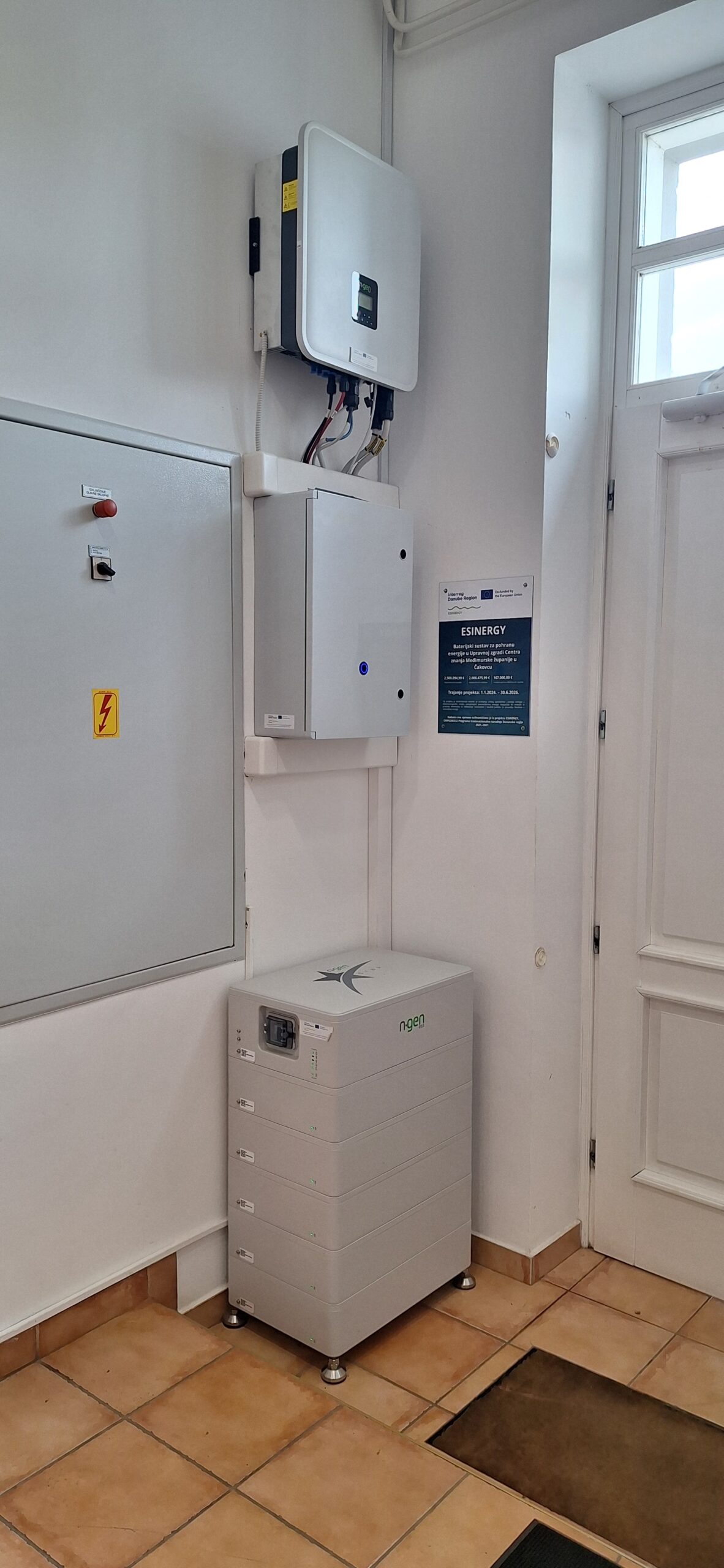
The Croatian pilot, implemented at the administrative building in the Knowledge Centre of Međimurje County in Čakovec, demonstrates how battery storage can help a public building store surplus solar electricity and use it during periods of higher demand. Such solutions can increase the self-consumption of renewable energy, reduce exposure to grid constraints and support more efficient energy use.
Beyond the pilot investments, ESINERGY delivered a Transnational Master Plan for reducing peak loads in electricity networks and a policy brief addressing energy storage, network stability and the implementation of the EU Renewable Energy Directive. These results provide guidance for municipalities, energy agencies, grid operators and policymakers seeking to replicate suitable solutions in their own territories.
Complementary solutions, one shared ambition
Concluded on 30 June 2026, Danube GeoHeCo and ESINERGY have laid the groundwork for wider adoption of innovative energy solutions across the Danube Region. Although the projects address different parts of the energy system, their objectives are closely connected. One promotes renewable solutions for heating and cooling, while the other supports the integration of renewable electricity through storage and smarter grid management. Together, they demonstrate the importance of combining technological innovation with planning, stakeholder engagement and local implementation.
MENEA’s involvement in both initiatives highlights the important role of regional energy agencies in translating European energy and climate objectives into practical local action.
Explore the projects and their results:
Danube GeoHeCo: https://interreg-danube.eu/projects/danube-geoheco