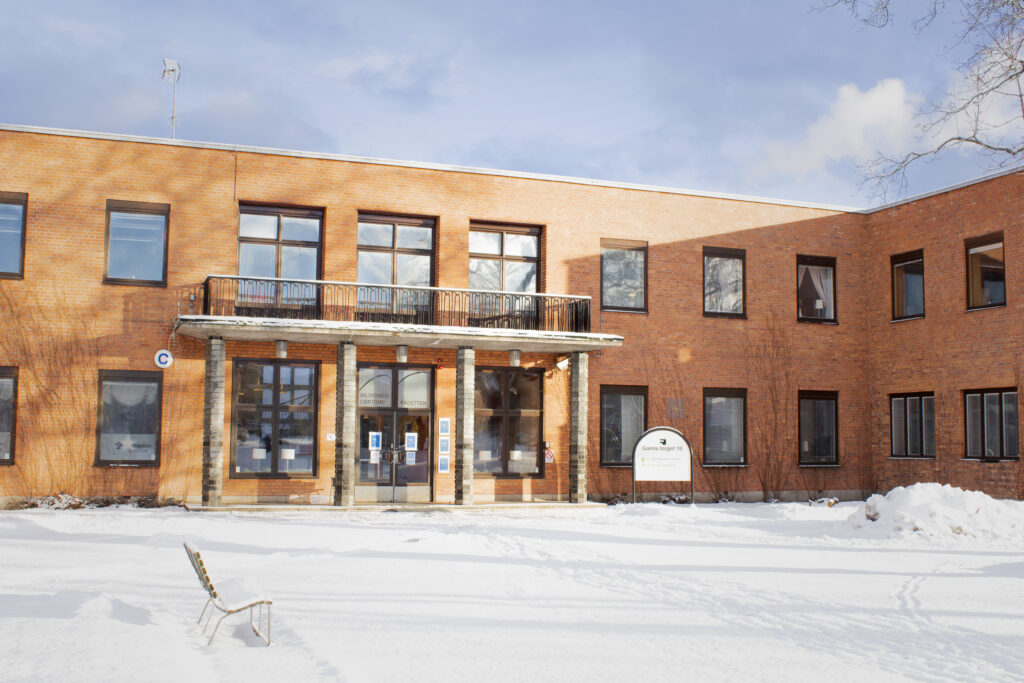
The Facetten pilot in Åtvidaberg began with ambition and a practical municipal interest. Åtvidaberg Municipality had a long history of working with climate and energy projects, and StartSun offered an opportunity to connect that experience with something concrete: lower energy use, local renewable energy production and a new way of organising energy around a shared site.
From the beginning, the idea looked promising. Solar panels could be installed either on the roof of Facetten or on the former sawmill site next to the building. Facetten, a municipally owned building with several business tenants, seemed like a credible place to test how an energy community could work in practice.
The original vision was to create an energy community that could later expand and show how municipalities can take an active role in innovative energy solutions. But the case also showed something just as important: a suitable site is not enough if the value proposition, political support and member commitment are not strong enough.
Why this case matters:
Facetten shows that municipalities need more than a suitable site to create an energy community.
Main challenge:
The financial viability of the model, political support and commitment from potential members were not strong enough.
Lesson for others:
Bring the municipality and potential members together early, build a shared understanding of the model and make the practical value clear before asking people to commit.
A site with real potential
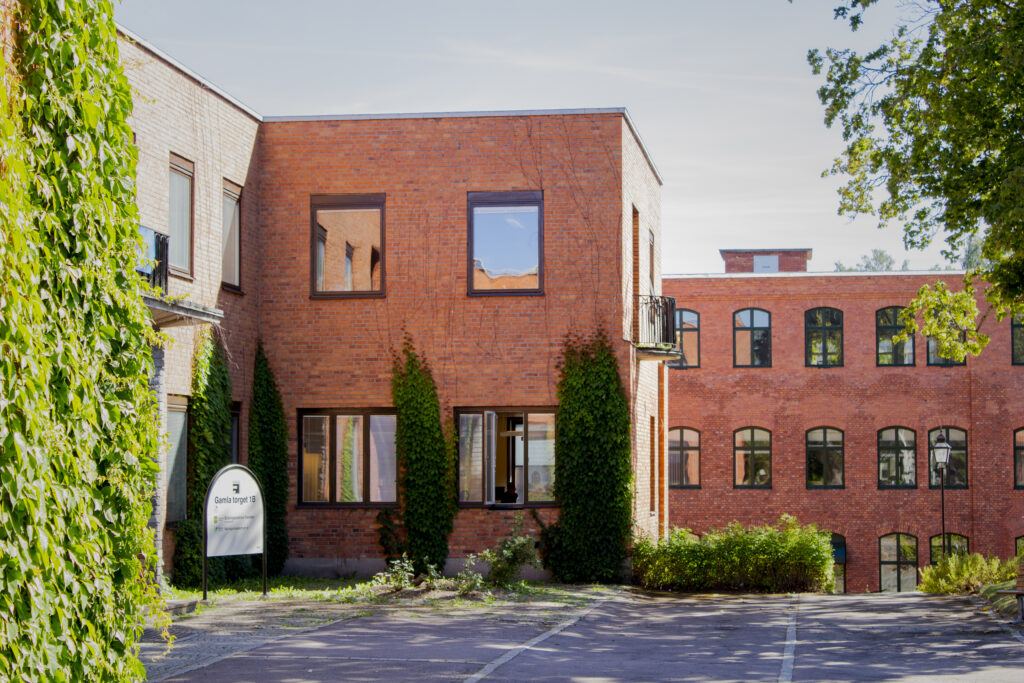
Facetten was not chosen by accident. The municipality was already looking at the former sawmill site in connection with plans to remediate the area. That created an opportunity to think more broadly about local energy production.
The building itself also made the case interesting. Several businesses rented space there, creating a potential basis for a shared model in which different users could become members of an energy community.
On paper, the case looked strong: a municipal owner, a nearby area that could host solar panels and potential participants already located in the same building. The early discussions reflected that promise. First, relevant people inside the municipality were involved, especially from the property department. Then the businesses renting premises at Facetten were included as potential members.
Interest was real, but did not become commitment
The process initially focused on businesses in the building and relevant actors within the municipal organisation rather than the wider Åtvidaberg community.
Among those invited in early, the response was not negative. Businesses showed interest and curiosity. They were already knowledgeable about energy issues and interested in renewable energy. But they wanted to know something more specific: how would an energy community affect their business model, and would it actually lower their energy costs?
That question became central. An energy community can sound appealing in principle, but potential members need to understand the practical benefit for their own organisation. In Facetten, the initial interest did not develop into enough commitment to support the planned model.
It was not fully clear whether the hesitation came from limited understanding of the model, or from the fact that the offer itself did not yet seem attractive enough.
The difficulty was not only technical
The project did not stall because the technology seemed impossible. The barriers were more complicated.
At first, it was difficult to engage potential members without a fully clear path for establishing the energy community. The project team had to build interest while being honest about uncertainty. The municipality had not yet secured the political investment decision needed to move forward, which made it harder to give businesses a concrete offer.
As the work continued, the main barrier became financial. The expected profitability of an energy community at Facetten was lower than hoped. Because the municipality would have owned the model, the need for a power purchase agreement, administrative costs and additional taxes reduced the attractiveness of the setup.
Facetten showed that even where the physical conditions are good, the organisational and financial design can determine whether an energy community still makes sense.
Knowledge was also a barrier
Another challenge was knowledge. Energy communities are still a relatively new concept, and many people involved did not have a clear understanding of what participation would involve, what benefits it could bring or what responsibilities it might create.
This mattered both among businesses and in the political organisation. Some businesses only partly understood the model. At the same time, the benefits did not seem strong enough to justify major interest. It was difficult to separate limited understanding from limited attractiveness.
On the political side, more time, clearer information and greater confidence in what the project would involve would likely have been needed before committing to the investment.
If an energy community is introduced before the groundwork of knowledge-building has been done, even potentially supportive actors may hesitate.
When the original plan began to unravel
The turning point came when it became clear that the project needed a political investment decision to move ahead with solar panels at Facetten and to commit municipal resources to the energy community. That decision did not materialise.
The issue was not opposition to solar panels as such. The larger problem was that too few businesses were ready to join the model. As a result, the municipality would have had to carry more responsibility than it was prepared to take at that time.
That shifted the project from a shared initiative into something heavier for the municipal side, and the original plan became difficult to justify.
For the project team, this was disappointing and frustrating. They felt that with more time for dialogue and knowledge-building, the energy community might have had a stronger chance. Facetten was not a case of immediate rejection. Rather, timing, uncertainty and an insufficiently committed member base prevented the process from fully maturing.
Still valuable, even without full implementation
The Facetten case did not develop as originally planned, but the process still created value.
Inside the municipality, the work built capacity. It improved understanding of how energy communities function, what role a municipality can play and what kinds of challenges such processes involve. The solar calculations produced through the project were later used elsewhere in the municipality to better understand where and how solar energy could reduce energy use and costs.
The process also helped shape municipal strategy. Åtvidaberg’s energy and climate strategy now includes a target related to working towards the establishment of energy communities in the municipality. The municipality is also planning solar panels at Facetten outside the formal frame of StartSun.
The possibility of an energy community at Facetten has not been forgotten either. The municipality intends to continue exploring how one could be established in the future, and the businesses in the building are aware that the discussion may continue.
Facetten matters precisely because it did not unfold neatly. It shows where real friction points can arise: limited time, limited shared understanding, weak incentives and institutional complexity.
A promising site is not enough on its own. Energy communities need time, a credible value proposition, informed participants and political support. Municipalities can play an important role as facilitators, but they also need the right conditions to bring potential members into a meaningful shared process.
Interested to learn more?
Join us on 22 September 2026 for the conference “From Concept to Community: Launching Solar Energy Communities“. This conference brings together local authorities, community initiatives, apartment associations, energy community leaders, developers, researchers, entrepreneurs and others interested in local renewable energy.
The conference will share practical experiences, success stories and challenges from developing solar energy communities, including technical, social and funding-related aspects, as well as cooperation models for turning ideas into action. Participants will also be introduced to the StartSun handbook and energy community feasibility calculator. The conference will be held in English and is co-funded by the European Union.