CEESEN-BENDER conference, held on 14 May 2026, gathered energy poverty experts to discuss best practices, tools and financing models for supporting vulnerable households across Central and Eastern Europe.
Click here to see the full video of the conference
Miljenka Kuhar, the Executive Director of the Society of Sustainable Development Design (DOOR), opened the conference by talking about how the energy renovations of multi-apartment buildings can be a driver of just and inclusive energy transition.
“The issue of just and inclusive energy transition is no longer only a matter of long-term climate or energy goals. It has become the key issue of social stability, security and resilience of our society,” said Kuhar.
One goal, five countries
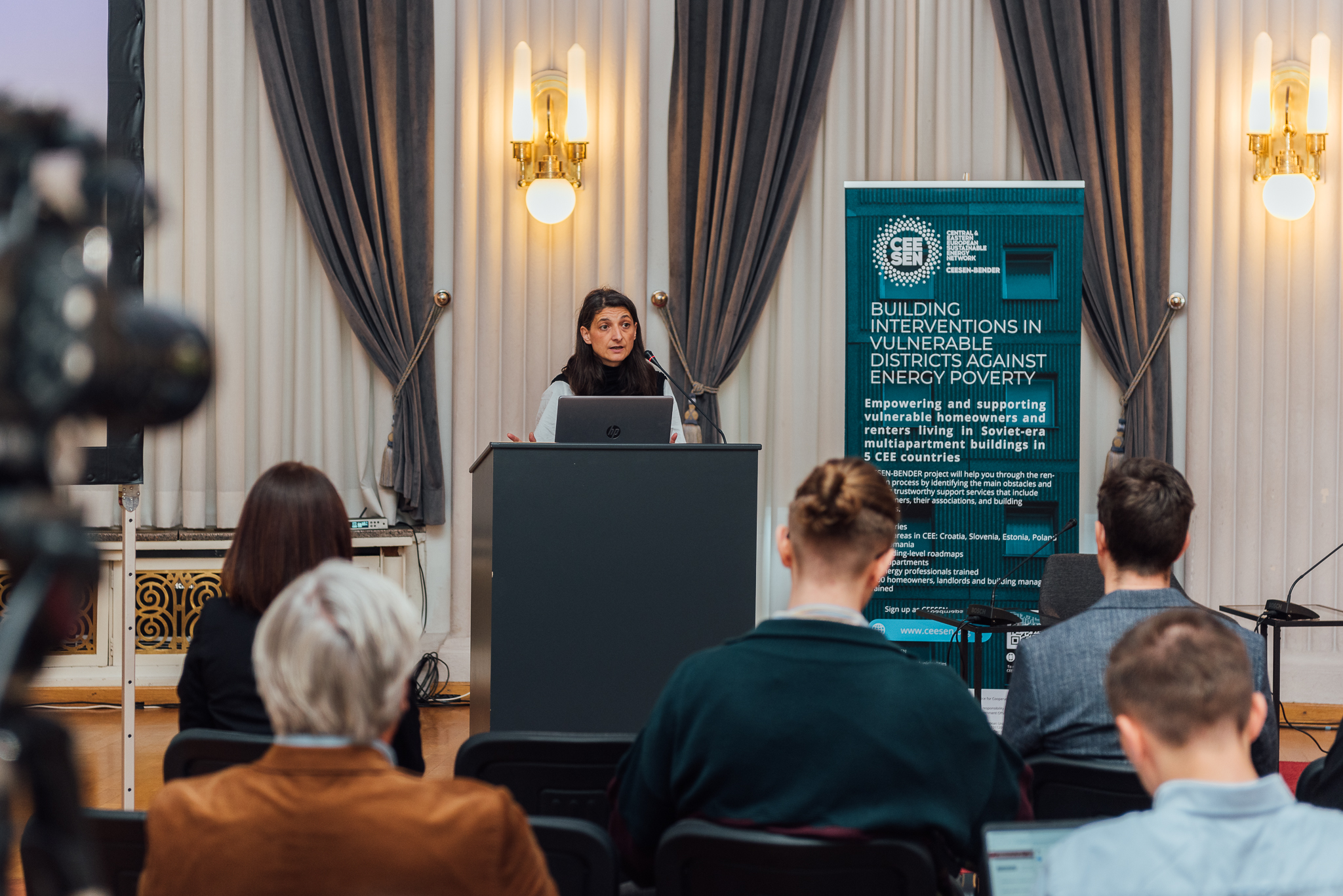
Across Europe, buildings account for around 40% of the region’s total energy consumption, yet the renovation rate sits at just 1% of building stock per year. Matija Eppert, the project manager of CEESEN-BENDER, emphasized that the project’s core mission was to ensure that energy-vulnerable households are not left behind in the renovation process.
“More often, those that are well off, well informed and quick on applications to subsidies get this help, but not those that need it the most. Lasting change is possible when communities lead the way,” explained Eppert.
The project helped combat energy poverty in multiple ways, including training over 3,500 people on the benefits of energy renovation, and triggering of 32 million euros in renovation investments within 5 years after the project closes.
Survey indicated that renovation helps, but doesn’t solve energy poverty
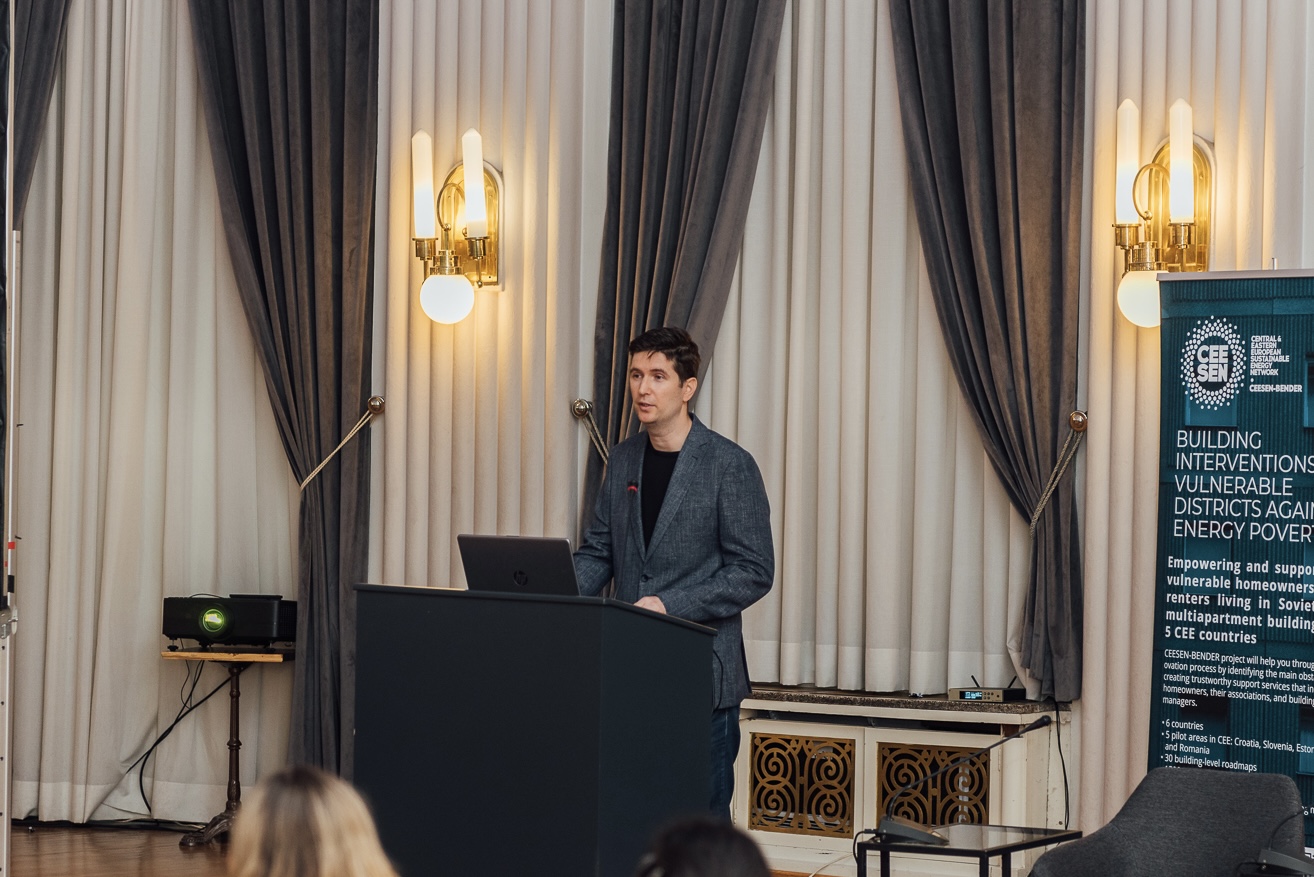
Tomislav Cik from DOOR presented results from an energy poverty survey of 2,034 households across CEE, finding that renovated buildings consistently showed better housing conditions and thermal comfort. However, renovation alone does not automatically resolve energy poverty.
“Affordability challenges do not simply disappear with renovation. (…) Residents are more often informed than involved (…) Renovation should be understood not only as a technical intervention but also as a social and governance process involving residents, co-owners and building-level actors,” said Cik.
Why energy renovation in CEE remains difficult
Eva Suba from Climate Alliance said that in CEE, the concept of “hidden energy poverty” presents a central challenge to energy renovations.
“One out of four Central European residents is energy poor, but because of different data situations and indicators, they do not appear in official statistics. Policies designed on average assumptions risk missing the most vulnerable of us all,” said Suba.
This creates a paradox where subsidies exist but consistently fail to reach those who need them most – due to unreliable data, high renovation costs, municipal capacity shortfalls, and a failure to communicate in plain terms. Suba offered five policy recommendations: high-quality data collection, human-language communication, support for one-stop shops, workforce training, and the partnership principle.
“Renovation works when support system works for people and when the people trust the system. So if we build a support system, we must do this for the people, not for the policy documents,” Suba emphasized.
The gap between policy and people
Marijana Butković Golub from the Croatian Ministry of Physical Planning, Construction and State Assets illustrated how even a fully subsidised programme, ran into a wall of ownership complexity. Buildings with unclear legal status or fragmented ownership fell out of the system – not because the will or the money was absent, but because the administrative and legal infrastructure wasn’t designed to handle the reality on the ground.
“We cannot give public money for buildings that are not legal or they are not in the right ownership,” said Golub.
Gregor Rome from the Slovenian Ministry of the Environment, Climate and Energy pointed out that the same people struggling with energy bills are often the same people known to social agencies, mobility services, and health systems – yet each ministry works in isolation.
“We are dealing more or less with the same group of people. All these poverty measures should be somehow aggregated at some point in the future,” Rome observed.
Kaspar Alev from the Estonian Ministry of Climate added that vulnerable households are not only hard to identify, but many will never raise their hand even when support is available.
“Only around 40% of people that can apply for social security in Estonia apply for it. There’s fear, passiveness, pride – all different types of reasons,” explained Alev.
Izabela Szostak-Smith from the City Hall of Warsaw’s Infrastructure Department noted that the lack of data on vulnerable households makes targeted help difficult.
“We live in times where our local supermarket knows more about us than our local government officials,” she said.
Warsaw has responded by using family benefit registries and social service centres as entry points to identify those most in need, and by deploying energy advisers who visit households directly, carry out audits, and provide personalised guidance through the renovation process.
Andreea Sicoe from the Romanian Centru Development Agency identified capacity – not funding – as the biggest bottleneck.
“Most of the beneficiaries don’t have enough effective staff for doing all this job at the same time. That’s the biggest problem,” said Sicoe.
Energy observatories and solutions to address energy poverty
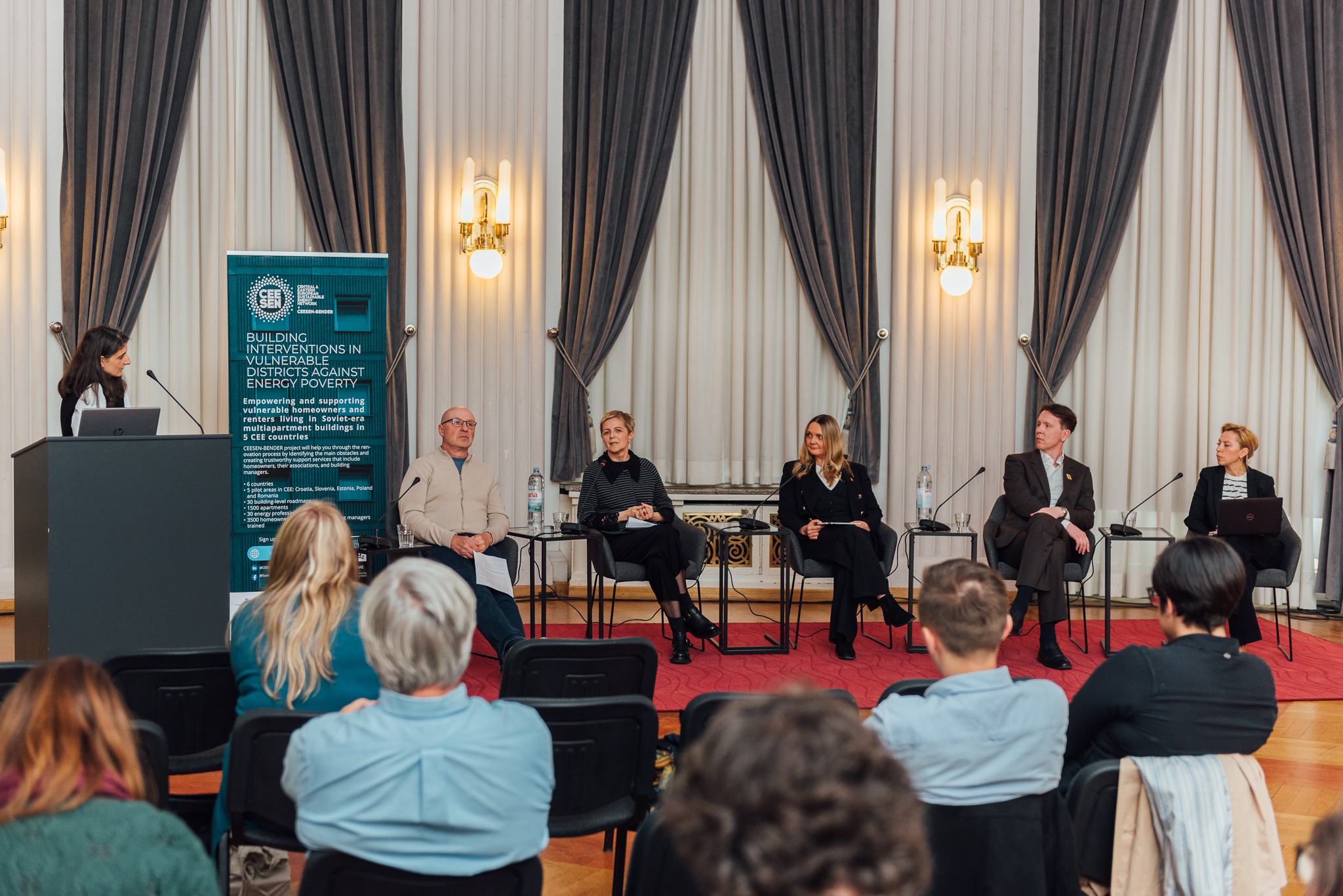
The moderator of the second panel, Kristina Eisfeld from the Energy Poverty Advisory Hub (EPAH), noted that the need for energy observatories is clear – EPAH’s own severity mapping has identified regions across Europe where energy poverty is particularly severe, with Romania among the most severely affected.
Irina Tatu from the Romanian Network of Energy Cities explained that governments often offer support such as heating aids and energy vouchers – easy to administer, but insufficient to address the underlying problem.
“These are measures that are easily quantifiable and easy to apply, but these are not measures that take you out of energy poverty,” said Tatu.
Karine Jegiazarjana from Climate Alliance framed the challenge using CEESEN-BENDER’s findings, arguing that the problem is not a shortage of ambition at the policy level, but the inability to translate that ambition into concrete local action.
“We know the problem of energy poverty exists. We see it everywhere in our cities but we don’t know the numbers. We see our buildings but we don’t know them.”
She argued that observatories should map the full renovation journey for all actors, making the process “as clear as going to the shop and buy groceries – otherwise it just creates too much stress already at the very beginning.”
On building trust, Jegiazarjana said that peer-to-peer knowledge transfer is more effective than expert outreach. She explained that people are more likely to trust their neighbors’ renovation experiences than an outside expert telling them what to do.
Alice Corovessi from INZEB presented the Energy Poverty Nexus project, which establishes energy poverty observatories in six countries where none currently exist. For these to function properly, she argued, they need three things:
“Stable financing, an institutional mandate that is very specific, and a mandatory role in shaping policies,” Corovessi counted.
Without these, an observatory can technically exist but be practically invisible – and its outputs must be validated by the community, not solely by ministries.
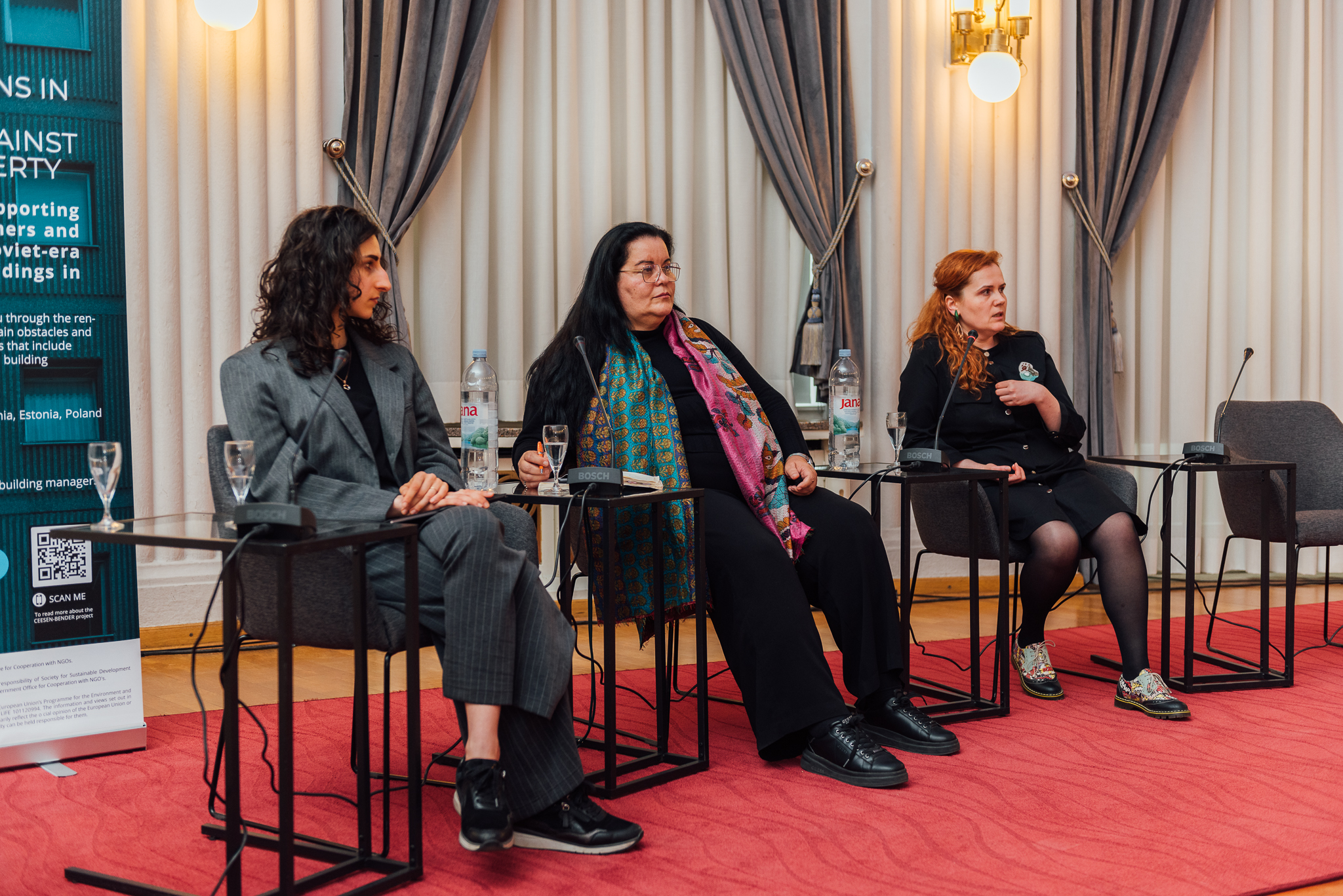
Tools from the conference to support vulnerable households
The CEESEN-BENDER Simple ROI Calculator, presented by Julia Bartkowiak (MAE), helps municipalities make informed decisions about renovating multi-apartment buildings by calculating projected ROI and payback periods from data on energy consumption, renovation costs, and property values.
Martyna Rosiak (MAE) presented two MESTRI-CE tools: the Smart Data Hub, a digital platform supporting investment decision-making through technical, economic and environmental analysis; and the Financial Assessment Tool, an Excel-based toolkit for evaluating renovation viability, comparing financing sources, and accounting for ESG criteria.
Ena Luketić from Croatian GreenBuilding Council presented the CrossReno Energy Efficiency Marketplace, a digital one-stop shop guiding Croatian citizens through every step of the renovation journey — from energy certificates and financing to finding vetted contractors — with separate pathways for family houses and multi-apartment buildings.
Martin Kikas from Tartu Regional Energy Agency presented the Estonian approach to scaling renovation through prefabricated facade panels: precision-measured, custom-built off-site and installed quickly, supported by standardised templates, predefined contracts, and a mandatory technical consultant guiding apartment associations from start to finish.
Finally, the DEAP project’s AI Advisory Tool, currently in development, conducts structured interviews with building owners, dynamically adapting its questions based on their answers, and produces a consistent structured summary that cuts down the information-gathering time for energy advisors.
The CEESEN-BENDER final conference was part of the EUSEW 2026 runner-up events programme.